
For many hair enthusiasts, lace front wigs are the ultimate game-changer. They offer unparalleled versatility, allowing you to switch up your length, color, and texture in an instant while giving your natural hair a well-deserved break. When properly installed, a high-quality lace front wig delivers a seamless, melted hairline that looks exactly like hair growing straight from your scalp.
However, there is a hidden danger in the world of wigs. While a flawless install can make you feel on top of the world, a reckless removal process can do serious damage. Your hairline—specifically your fragile baby hairs and edges—is incredibly delicate. Pulling, ripping, or rushing the removal of hair wigs can lead to traction alopecia, a form of gradual hair loss caused by localised pulling force on the hair follicles.
If you want to protect your natural hair while still enjoying the endless styling freedom of wigs, you need to prioritise a safe removal strategy. In this comprehensive guide, we will break down the absolute safest, damage-free methods to take off your unit, preserve your edges, and keep your natural hair thriving underneath.
What Is a Frontal Wig and Why Does Removal Matter?
Before diving into the step-by-step removal process, it helps to understand the anatomy of what you are actually working with. If you are new to the hair world, you might wonder: what is a frontal wig exactly?
The Anatomy of a Frontal Unit
A frontal wig features a piece of sheer lace that typically extends from ear to ear across the front hairline. Strands of human or synthetic hair are hand-tied into this lace mesh to mimic a natural growth pattern. Because the lace mimics a real scalp, stylists use strong adhesives, specialized melting sprays, or heavy-duty wig tapes to secure the perimeter down to your skin.
The Bonding Trap
Because these adhesives are formulated to withstand sweat, water, and daily movement, they don't just "let go" on their own. When it is time to switch up your look, the bond between the lace and your skin is often still highly active. If you try to forcefully peel back the unit without properly breaking down the glue, the adhesive will grip onto your natural hairline and rip your edges out from the roots. Safe removal is entirely about chemically breaking that bond before the lace ever moves a millimetre.
Pre-Removal Checklist: Gather Your Supplies
Never start taking off your unit on a whim. The biggest mistake people make is trying to remove their hair when they are tired or in a rush. Patience is your best friend here. Before you begin, gather the right tools for the job:
- A dedicated adhesive remover: Look for a commercial lace glue solvent (medical-grade citrus or alcohol-based removers work best).
- Natural Oils: Pure jojoba oil, extra virgin olive oil, or organic coconut oil.
- A soft microfiber towel or cotton balls.
- A few plastic hair clips to keep the bulk of the wig hair out of your face.
- A spray bottle filled with warm water.
Step-by-Step Guide to a Damage-Free Removal
Now that you have your supplies ready, follow this gentle, non-stripping method to safely release the lace from your perimeter.
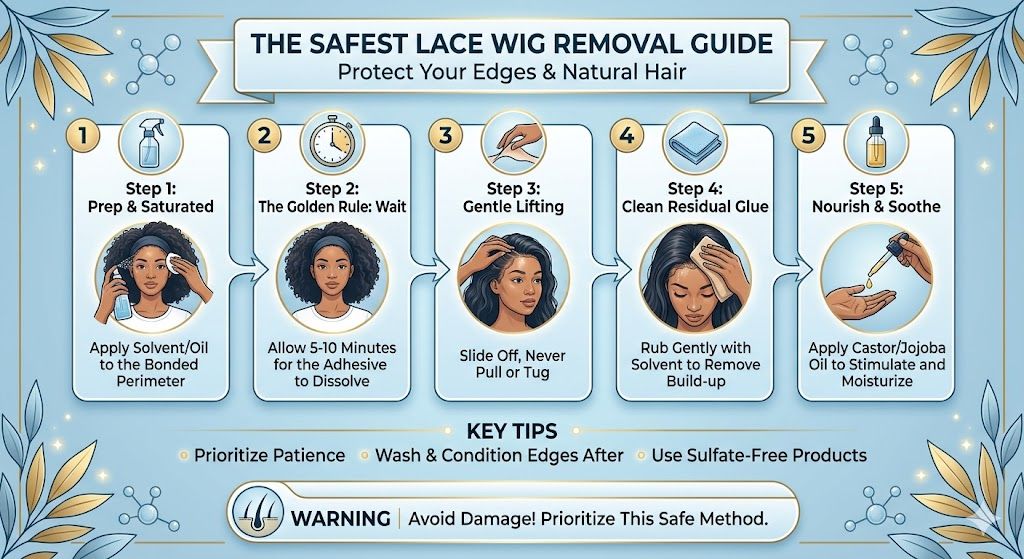
Step 1: Clip Back the Excess Hair
The last thing you want is the long strands of your wig getting stuck in the adhesive remover or blocking your view. Use your plastic hair clips to securely pin all the wig hair back away from your face, fully exposing the bonded lace perimeter from ear to ear.
Step 2: Saturated the Lace Perimeter
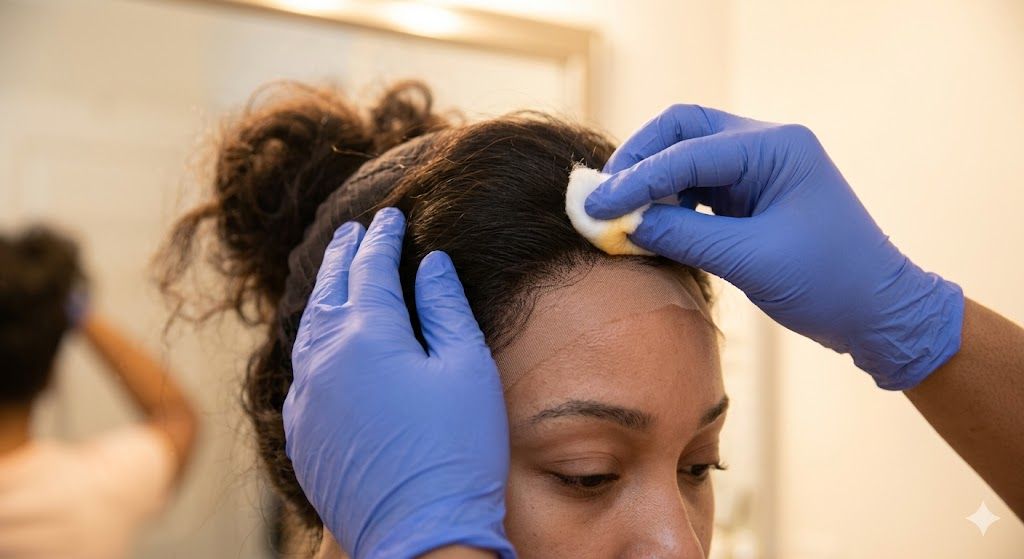
Apply your chosen adhesive remover directly along the lace hairline. Be generous with the product. If you are using a liquid solvent, saturate a cotton ball and press it firmly against the lace. If you prefer a more natural approach, you can slather a thick layer of coconut or olive oil directly over the glued areas. The fatty acids in natural oils are incredibly effective at slowly dissolving stubborn adhesive bonds without drying out your skin.
Step 3: Let It Sit (The Golden Rule)
Once the solvent or oil is applied, do absolutely nothing for 5 to 10 minutes. This is where most people fail. You must give the product time to break down the chemical structure of the glue. Sit back, watch a video, or listen to a song. You will know the adhesive is ready when you see the edges of the lace beginning to lift naturally on their own.
Step 4: Gently Lift—Never Pull
Starting at one of the outer corners near your ears, gently lift the lace away from your skin. If you encounter any resistance or feel a tugging sensation on your skin or edges, stop immediately. Apply a little more remover or oil, wait another two minutes, and try again. The wig should slide off effortlessly; you should never have to pull.
Post-Removal Care: Cleaning and Soothing Your Edges
Once the wig is completely off, your job isn't quite done. Both your lace unit and your natural edges will likely have a sticky, gooey residue left behind. Cleaning this up properly is essential for preventing clogged pores and skin irritation.
Cleaning the Skin
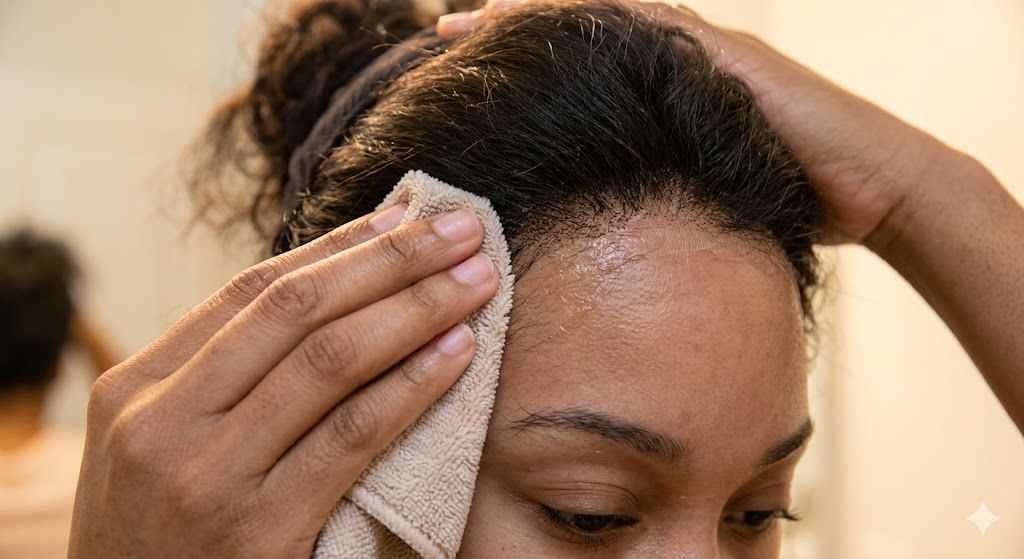
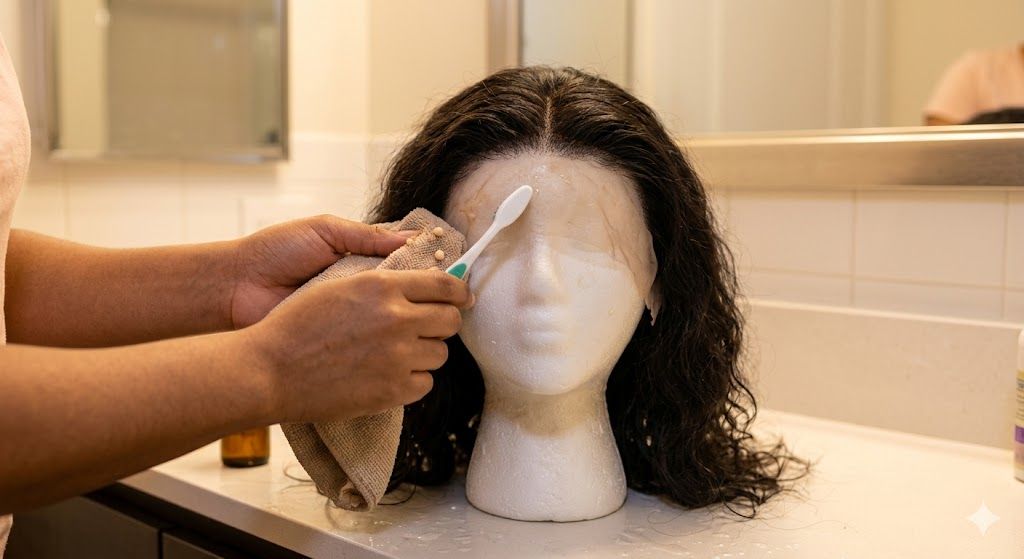
Do not try to scrape or scratch the remaining glue off your skin with your fingernails. Instead, saturate a soft microfiber cloth with warm water and a bit of your adhesive remover. Gently rub the perimeter in a circular motion. The leftover glue will ball up and flake away easily. Follow up with a gentle, hydrating facial cleanser to remove any oily residue.
Soothing Your Natural Hairline
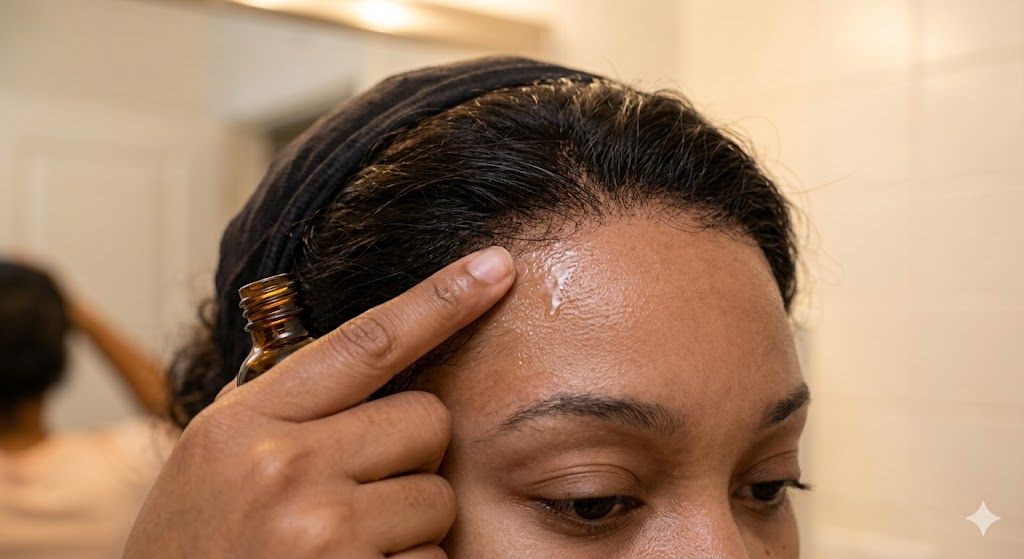
Your edges have been under a bit of tension and covered up for weeks. Give them some love. Wash your natural hairline with a sulfate-free shampoo to ensure no glue remover remains in your natural hair. Follow up with a deep, nourishing conditioner. Once dry, apply a lightweight, stimulating oil like rosemary or castor oil to your edges to promote healthy blood circulation and hair growth.
Pros, Cons, and Common Removal Methods
There is no single "correct" product to use for removing lace front wigs, but different methods have distinct advantages and drawbacks.
Method A: Alcohol-Based Solvents (Isopropyl Alcohol)
- Pros: Works incredibly fast; dissolves heavy-duty glues in minutes; very inexpensive.
- Cons: Extremely drying to both the skin and your natural hair; can cause breakouts or chemical irritation if left on too long.
Method B: Oil-Based Removers & Natural Oils (Coconut, Olive, Jojoba)
- Pros: Highly nourishing; completely safe for sensitive skin; keeps your natural hair hydrated during the process.
- Cons: Takes significantly longer to work; requires more patience; can be messy and hard to wash out of the wig lace afterwards.
Frequently Asked Questions
Can I remove a glued lace front wig with just water?
No. High-quality wig glues are formulated to be completely waterproof and sweatproof. Plain water will not break down the adhesive bond. Attempting to wash a glued wig off with just water will cause the glue to clump, matting your natural hair into the lace.
How often should I take off my lace front wig?
To maintain optimal scalp health and keep your edges intact, you should generally avoid keeping a glued wig on for more than 2 to 3 weeks at a time. Leaving a unit on for longer can cause sweat, bacteria, and dead skin cells to accumulate under the cap, leading to itching and potential fungal irritation.
What should I do if my edges are already thinning?
If you notice your hairline is beginning to recede or thin out, take a clean break from all glued hair wigs. Switch to glueless wig options, wear headband wigs, or opt for protective styles that do not require adhesives or tension on the perimeter until your edges fully recover.

Summary of Key Takeaways
Protecting your hairline while wearing lace front wigs doesn't require professional intervention—it just requires a commitment to patience and the right technique.
To wrap it up, always remember the core pillars of safe wig removal:
- Never rush: Give your solvents or natural oils a full 10 minutes to properly dissolve the bonds.
- Let the product do the work: If you feel a tug on your natural hair, add more remover and wait.
- Prioritize scalp care: Always thoroughly cleanse and deeply moisturize your edges after the unit is removed.
By treating your hairline with care, you can enjoy all the creative styling options that modern wigs have to offer without ever sacrificing the health and density of your natural hair.